
Sweet Revolution
"I know my passions come more from a place of anger than compassion, that when I utter the words patriarchy and imperialism I am fueled by a resentment that came free of charge with my sex and race."

By Rushda A.
Sweet revolution, how I wish the female tears
rolling silently down my face this second were each a bullet,
each word I write, each character on my typewriter bullets
to kill whatever it is in men that builds this empire, colonized my very body,
then named the colony Monster.
— Robin Morgan, “Monster”
Perhaps we only ever found ourselves in the final chapter, in haunting subtext, in the footnotes of a story about someone else’s hardships. Perhaps our dreams were only ever lived in fleeting metaphor, between boldly written lines on courage and conviction. I’m not sure what passes for good poetry, really, but what does it matter? There’s a certain kind of liberation in producing terrible prose: here’s something I wrote, folks, make of it what you will. I’ll tuck a dream away in its folds—will you excuse my self-indulgence if I acknowledge it in passing humor? I’ve been choking on my anger for so long it has finally allowed me to spit out an ugly sentence.
My feminism is not the fun kind. It’s all systemic change and sex-based rights and yes, I will interrupt the banter to point out that your throwaway remark was deeply sexist. My feminism is not the liberal kind; it won’t gift-wrap your desperate androcentrism in empowerment rhetoric so you can feel better about perpetuating the patriarchy.
All these words, and so little to show for it. Maybe I’ve failed as a writer because I can’t bring myself to write a straightforward sentence. Or maybe my writing, like my feminism, is just a load of pretentious, self-congratulatory bull. Who tries to alliterate with “patriarchy,” anyway?
I feel unworthy of this anger. To give it expression feels almost presumptuous, because what could I possibly know about the ocean of injustices that other women have been made to endure? I am not my mother, ever the epitome of self-sacrifice. I am not my friend, witness to male domestic violence before she was old enough to put a name to it. I am not the Palestinian woman who has known rape as a weapon of war, who is fully aware of the interaction of sex, race and class in the occupier’s equation because she has survived the most brutal iterations of it. I’m not Kashmir, or Sudan, or Congo. I am not the women of Afghanistan, whose fury is rhetoric in the hands of imperial powers. I was only three when Laura Bush delivered her radio address—these memories aren’t mine, but I carry them all the same.
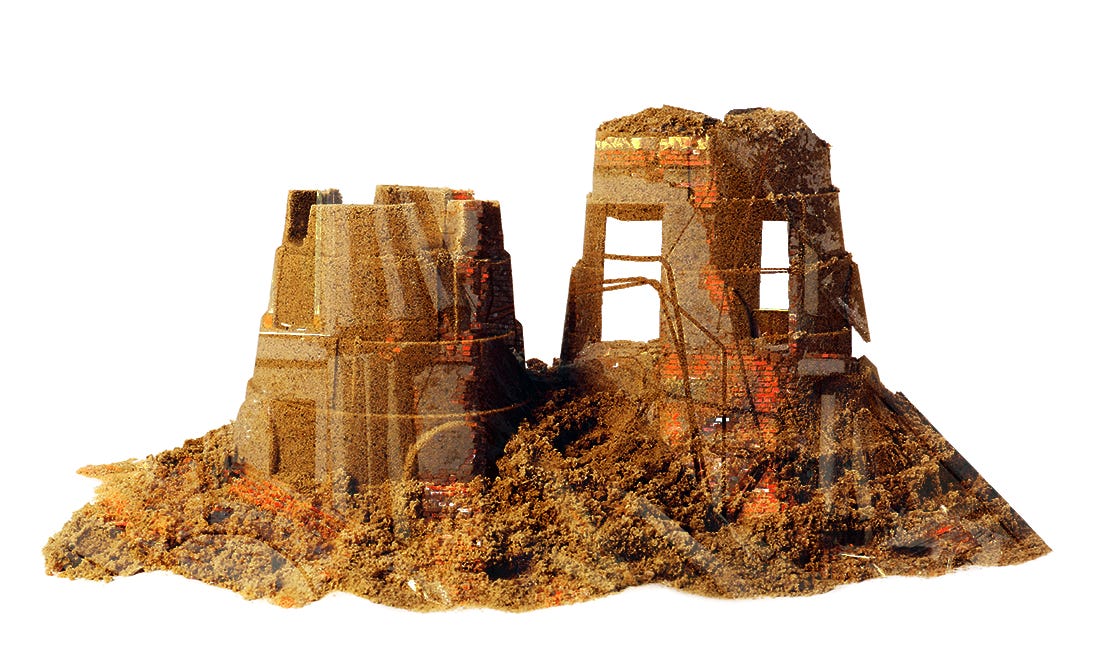
I wonder if I have ever known conviction, except in bitter aftertaste. There is something to be said for a feeling so fragile—for all these years of building metaphorical sandcastles and watching them fall apart. You’d think there’d be comfort in familiarity, but disillusionment becomes a peskier companion the further you go. The institutional left was always going to surrender to neoliberal hegemony, but I had hoped that we could keep another fire raging in the quiet spaces we held—where we remembered that the liberation of women necessitated the fall of empire.
But we’ve seen your banners and we’ve heard you shout your slogans from the rooftops: “rape is not resistance;” banal truisms that obscure a social imaginary so desperate to paint brown men as savages, bonus points if they’re unashamedly Muslim. It is the oldest trick in the book, this othering: women’s bodies coded as male property, standing in for the honor of men and the sovereignty of a nation. Did you hesitate, if only for a moment, when the resistance demanded an independent investigation into the claims you peddled, or when all attempts at such an investigation were thwarted by the Zionist war machine? Evidence became an inconvenient afterthought in the dehumanization of my people, because the accusation was proof enough. What else could you expect from these fundamentalist Muslims? They throw Molotovs at artillery and shout God is great in the moments before a sniper’s rifle picks them off.
You were told it was a war of the civilized West against savages in the East. The civilized people had given us the gift of genocide, and ceaseless interventions, and nation-states founded on arbitrary colonial borders. And those claims of sexual violence—they echoed a long history of weaponizing our bodies to manufacture consent for state-sanctioned terror. Surely you haven’t forgotten how racist tropes of black men raping “our women” whipped up a frenzy that rationalized public lynchings in the Jim Crow era? And yet again, women’s bodies became battlegrounds for soldiers of imperialism, and you nodded along in scandalized agreement, while you overlooked the systematic and well-documented sexual torture that came with 77 years of brutal occupation. Or maybe you didn’t, but your solidarity was always punctuated with practiced caution: look, I stand with the oppressed—just not when they rise up to resist. Only when they are perfect victims, lambs to the slaughter, civilized and well-behaved to their dying breaths.
I would rather be a savage than civilized. God is great, and a revolution is not a bed of roses. What is it about your feminism that lets moral cowardice masquerade as nuance? You called yourself radical, and you spoke of structural oppression, even as you denied the right of an occupied people to armed resistance.
For a moment we said we have our differences and swept it under the rug, along with sixty-nine thousand brown bodies from a three-year war, voiceless in death, sacrificed on the altar of our pragmatic alliances. But the moment was fleeting, and thank goodness for it—for the cracks in female solidarity that have grown into the fault lines of our feminism.
What a strange thing, this unchecked privilege: it allows me to make metaphors out of martyrs thousands of miles away from the smell of burnt and bloodied limbs.
We must push the line back. Our feminism is nothing if not anti-imperial.
Back in the day, to be a radical feminist meant to believe in struggle and conflict, to reject the moral absurdity of non-violence, and to have absorbed the radical anti-liberal critique of the sixties. Malcolm X said, “The white liberal differs from the white conservative only in one way: the liberal is more deceitful than the conservative … Both want power, but the white liberal is the one who has perfected the art of posing as the [Black man’s] friend and benefactor.”
The treachery of liberalism still rings true, in every one of its mutations: how it stubbornly refuses to challenge the status quo while pretending it does. The reality of the liberal international order may come as a rude shock to the well-intentioned beneficiaries of wealth and whiteness, but for those of us who live its consequences every day, ignorance is a luxury we were never afforded. Just like liberalism made a spectacular pretense of confronting white supremacy then and now, so it pretends to confront patriarchal oppression: by welcoming with open arms the appropriation of women’s bodies for sexual access, labor, and reproductive control. If you can misrepresent the preclusion of choice as autonomy, you can convince everyone that the capitalist patriarchy of porn, prostitution and surrogacy is little more than a woman’s potentially empowering, individual choice. You can forget that our choices can never truly exist outside of the oppressive structures within which they are formed. Oppression is never material, never real, never based on the distribution of power; it only ever exists in an abstract realm inside your head. Freedom is slavery. Ignorance is strength.
MacKinnon told us our feminism ought to be relentlessly political, that you become what you do not resist. What are we to make, then, of MacKinnon’s Zionist sympathies, or her denial of the most well-documented Israeli atrocities? I am reminded of June Jordan and her unflinching struggle for Palestinian liberation. The fault lines separating feminists had grown into chasms long before today: Israel’s invasion of Lebanon and the massacre at Sabra and Shatila led to the inevitable rupture between Jordan and fellow feminists—among them Adrienne Rich and Audre Lorde. Jordan and Lorde, poets and erstwhile sisters-in-arms during the Black Power movement, fell out now over Israel. Lorde appealed to unity among Black and Jewish feminists, but for Jordan, unity at the expense of principle was no unity at all. “Your evident definition of feminism,” Jordan wrote to Rich, “leaves you indistinguishable from the white men threatening the planet with extinction.” By the turn of the century, Rich and Lorde had both become staunchly anti-Zionist.
Criticisms of Jordan’s anti-Zionist feminism had often revolved around intersectional experiences, “lived realities” and appeals to identity that were devoid of structural analysis. There’s a lesson to be learnt here about identity reductionism, and the ways racialized people have been mobilized as handmaidens of empire.
For leftists who treat the struggle for women’s liberation as a tiresome distraction from “real” politics, it is convenient to forget that patriarchy is a precondition for capitalist accumulation, that it is the backbone of colonial economies. My friend dismisses feminism as a “Eurocentric ideology,” and for a brief moment, I let myself marvel at the irony of the charge. I think it’s pretty Eurocentric to pretend that feminism is a monolith, I say. Or that non-white women haven’t already globalized the women’s movement. Why center Betty Friedan’s myopic suburban-housewife liberal feminism to the exclusion of the second-wave feminisms that criticized it? What about the women who have expanded feminist theory to combat the caste system in India or the military-prostitution complex in the Philippines? But in the back of my mind, I’m still thinking of the charred bodies I glimpsed on Twitter today, the screams of children, the deafening silence from allies who never were.
The feminists who helped shape the women’s movement offered uncompromising critiques of its trajectory, even as they struggled to reclaim it from forces that were determined to defang it. Carol Ehrlich lamented how “feminism seems more and more to have taken on a bland, safe, non-revolutionary outlook;” Carol Hanisch observed that “the robust cry for women to unite for organized power to defeat male supremacy has all but disappeared;” bell hooks spoke of the self-identification as feminist by women who are “not opposed to patriarchy, capitalism, classism, or racism.”
It was always important that, in the imperial core, the struggle for women’s liberation be premised on an acute awareness of class and race. If the first wave was catalyzed, at least in part, by the abolition movement, then the second wave sprang out of the civil rights movement. Radical feminism was radical because it demanded structural change; how did we let the last fifty years undo the triumphs of feminist struggle? How did the moral clarity of a movement carefully grounded in material analysis give way to “girlboss” rhetoric that brazenly embraced capitalist agendas?
Every instance of liberal failure is a clarion call to radical politics. To individualize systemic oppression is to play into the hands of the oppressor; the only way forward is to tear down the system.
I stand in front of the bathroom mirror and I realize I’ve forgotten what self-acceptance looks like. My feminism is brutal and unforgiving: she makes no attempt to hide her disgust at the vanity of my insecurities. I wonder if it’s worth a lifetime of self-flagellation, this abstraction of womanhood, or if the weight of it gets easier to carry with time. Forgive me, Mother, I was too afraid of the past to mourn the loss of a future that was never mine. I see you holding on to my dreams of ash, even now, with your steady palms and your quiet courage. But when my words run dry and I can no longer wring poetry out of pain, what shall I do with this loss and longing? I am fearful, so fearful—that the battles you fought will be lost in a life like mine. Me, with my fickle passions and my crippling fears, building sandcastles with shaky palms. Looking to the skies, praying for salvation with the swelling tide.
It’s an impossibly long road to unflinching femininity—my twelve-year-old self thought she could evade the whole problem by declaring her hatred for all things pink and floral. I know better now, because there’s nothing that screams misogyny like convincing yourself you’re “not like other girls.” But there’s a safety I’ve forfeited in this newfound consciousness, a freedom of sorts: Dworkin said it was an agony to be fully conscious of the brutal misogyny which permeates culture. For the longest time, I had gone through life unbothered by my own cognitive dissonance. I have to remind myself, now, that femininity is nothing more than a patriarchal construct, that to reject the trappings of this construct is as much an admission of defeat as it is to conform.
I know my passions come more from a place of anger than compassion, that when I utter the words patriarchy and imperialism I am fueled by a resentment that came free of charge with my sex and race. After all, anger is currency in a way that kindness is not. Oh, if I could be half the woman my mother is.
But I have heard us whisper our stories to each other, sister to sister to sister, and I have recognized in them an enduring love. We hold them out to each other as offerings of hope, words stitched together from memories of bygone days—and promises of better ones to come. We stood on the precipice of tomorrow, aspirations tempered by fear, arms outstretched towards an infinity of possibilities. We were all of us witches, prostitutes, survivors; all of us only ever as liberated as the most brutalized among us.
To my friends, to the women I love, to my mother—for all the storms you’ve weathered, and for all the storms to come; there is so much I must thank you for. I see the world, for all its casual cruelty, mold itself around your faith. Your stories write themselves on burning parchment, bursting into flames from which phoenixes are born.
It is a beautiful thing, this feeling—this aching need for upheaval. Surely we are more than the sum of our circumstances? The sandcastles we made are still standing in the ridges of my imagination. I’ve saved you a spot here, alongside unwritten dreams.
Come over someday. We’ll light a fire under the stars, watch the waves recede into the sea. Whip up a riot, let a murmur swell into a roar. Sweet revolution, we’ll sing our poem even as it scorches our tongues. Leave space for tomorrow in the margins of our story. There is work to be done, but tonight, our sandcastles will survive the storm.
So beautifully put! I can’t help but feel it all!
Surely we are more than the sum of our circumstances💪🏻❤️🔥🕊️✨